
B-mode: what really happens when a ride's biggest effect breaks
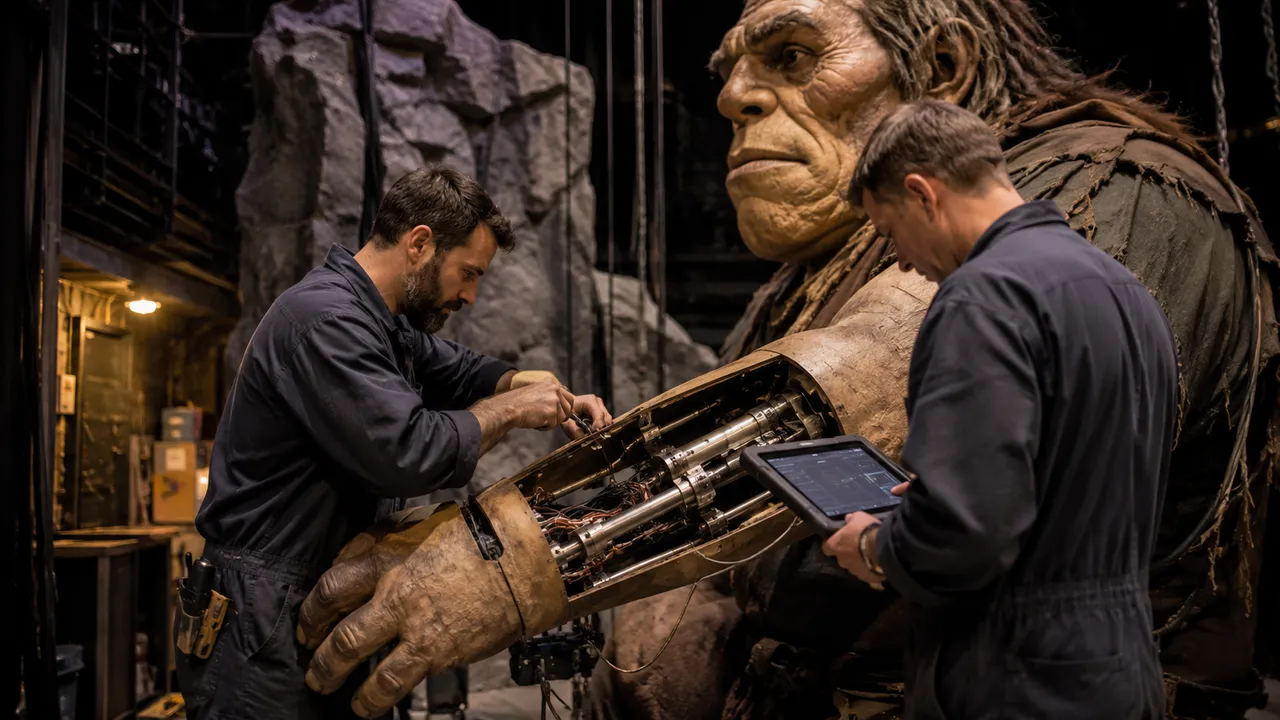
If you've ever ridden Expedition Everest and thought the Yeti looked a little... still, you weren't wrong. That frozen, strobe-lit figure has a name in the industry: B-mode. It's not a glitch — it's a deliberate backup system, and once you know it exists, you'll start noticing it everywhere.
What B-mode actually is
Every major show scene on a big attraction has an intended version — the full effect, animatronic and all. Engineers call that the A-mode. But animatronics are mechanical, and mechanical things eventually break. So designers build a second, simpler version of the same story beat that can run instead, without shutting the whole ride down. That's B-mode: not as impressive, but reliable enough to keep the queue moving while the real fix happens backstage.
The philosophy behind it is simple — a park doesn't want to close a nine-figure attraction every time one animatronic hiccups. Building a fallback in from the start means guests still get a complete story, even on the day something's down.
The Yeti: theme park's most famous B-mode
Expedition Everest opened at Animal Kingdom in April 2006 with a Yeti animatronic built to lunge and swipe at passing trains with enormous hydraulic force. That force was the problem: within months of opening, the strain cracked the steel framing the figure was mounted to — framing tied directly into the ride's structural support.
Rather than risk further damage, Imagineers switched it to B-mode: the Yeti stays frozen mid-lunge while a strobe light flashes across it to fake movement. Fans nicknamed it the "Disco Yeti." It's been running that way for almost the entire life of the ride — nearly 20 years and counting.
Na'vi River Journey: the screen swap
Na'vi River Journey's Shaman of Songs is one of the most advanced animatronics Disney has ever built — and it was designed with a B-mode from day one. When the figure needs maintenance, crews slide it backstage and swap in a large screen playing a digital version of the same performance. Guests still get the moment; it's just not the physical animatronic.
Rise of the Resistance: Kylo Ren's TIE fighter chase
Hollywood Studios' Star Wars: Rise of the Resistance has one of the more elaborate B-modes in the industry. When the full-scale Kylo Ren animatronic is down, the ride vehicle takes a different path entirely, and a projected TIE fighter chase plays outside the window instead — with Kylo appearing on-screen from his own ship. It's a full scene substitution, not just a lighting trick, and by most accounts it's almost as reliable as the real thing.
Universal has its own version, too
B-mode isn't just a Disney thing — any park running large-scale animatronics and puppetry has to plan for the same failure points. Some guests have reported catching a performance of The Untrainable Dragon at Epic Universe without its massive flying Toothless puppet in play — the story still landed, and plenty of the audience never clocked the difference. It's a reminder that a 1,150-pound flying puppet has a lot of moving parts, and a show built well enough that most guests don't notice when one of them isn't moving.
What it says about the tradeoffs these parks keep making
Line these cases up and a pattern shows up. Na'vi River Journey and Rise of the Resistance were both designed with a B-mode from the start — the fallback was part of the plan, not a patch. The Yeti wasn't: it was built at the very edge of what its own structure could handle, and when it broke, there was no graceful backup ready to go, just an emergency one improvised after the fact. Almost 20 years later, it's never been upgraded.
That's really the lesson newer attractions seem to have learned — build the backup in from day one, so a broken effect is a shrug instead of a 20-year legend. The Yeti still gets talked about precisely because it's the exception: a spectacular idea that outran its own engineering, permanently. The parks getting it right today are the ones planning for the breakdown before it happens, not after.
Final thought
Next time an effect on a ride feels a little quieter or a little less dramatic than the trailer promised, there's a decent chance you just experienced B-mode — and most of the time, that's the system working exactly as designed.
ParksLog is an independent project, not affiliated with any theme park or entertainment company mentioned. All names and trademarks belong to their respective owners. Information may change — always confirm details directly with the park before your visit.