
Ultimate Guide to Disney Lightning Lane (2026): How It Works and Is It Worth It?
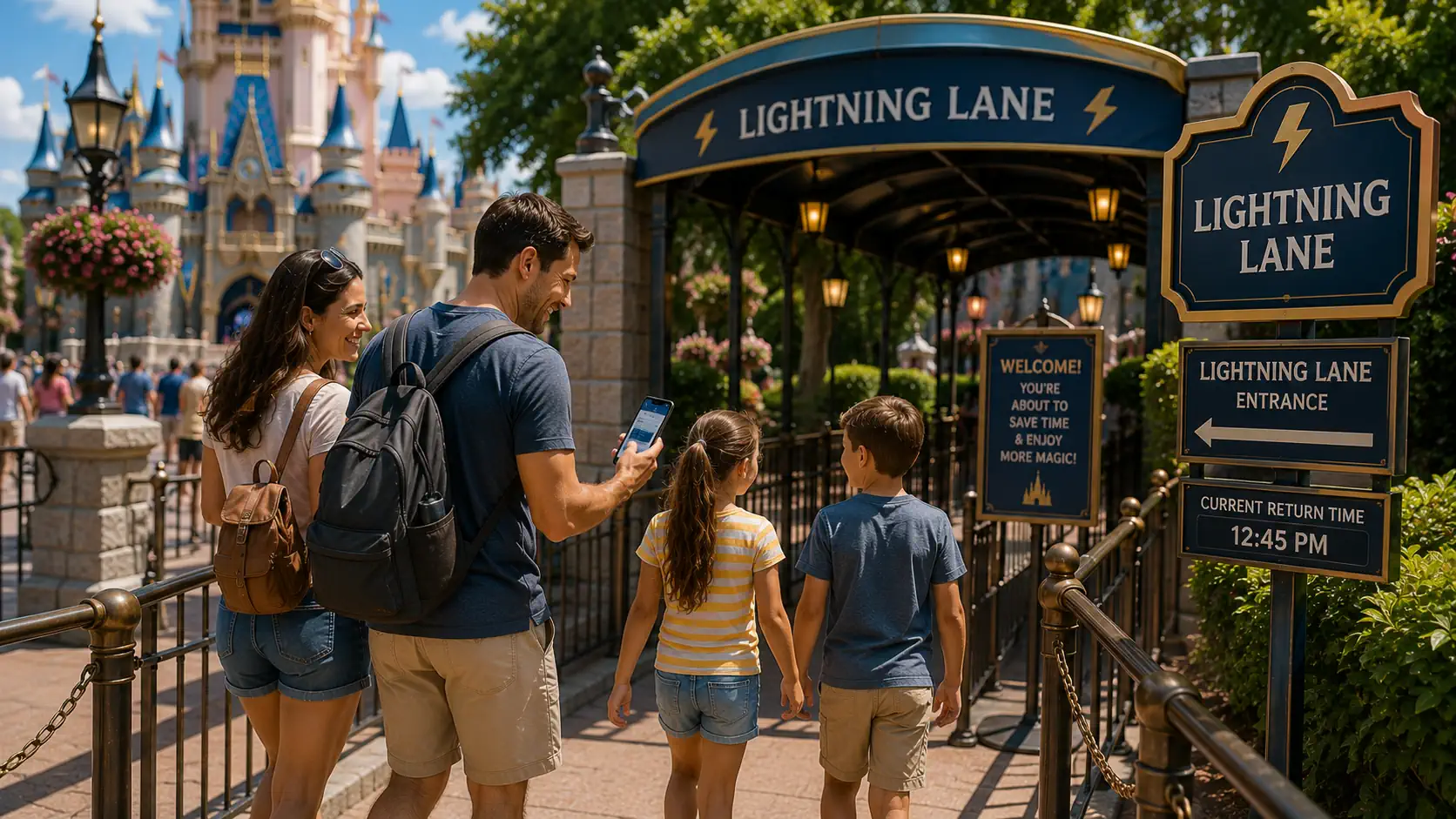
If you're planning your first Walt Disney World vacation, you've probably heard people talking about Lightning Lane. Some say it's essential. Others say it's a waste of money. After helping friends and family plan more Disney trips than we can count, we can tell you the honest answer is both — it depends entirely on how you use it, and on the kind of vacation your family actually wants.
Disney Lightning Lane can save your family several hours of waiting in line, but only if you understand how it works. Unlike Universal Express, Lightning Lane isn't simply a pass that lets you skip every line — it's a planning tool, and the better you understand it, the more value you'll get from it.
We don't think everyone should buy Lightning Lane, and we're not shy about saying so. Our goal with this guide is to help you decide whether it's the right choice for your vacation, not to convince you to spend more money. By the end, you'll know what to actually buy (if anything), which attractions are worth building your day around, and how to avoid the mistakes that cost first-time visitors real vacation time.
Quick answer
Lightning Lane is usually worth buying if:
- You're visiting during busy times of the year.
- Your family has several "must-do" attractions.
- You're comfortable using the My Disney Experience app throughout the day.
You can probably skip it if:
- You're visiting during a slower season.
- You don't mind waiting in standby lines.
- You'd rather have a relaxed day without checking your phone every hour.
Here's the fast version, side by side:
| Your situation | What we'd buy |
|---|---|
| Peak season, several must-do rides, comfortable using the app | Multi Pass |
| Only one or two rides you truly can't skip | Single Pass — maybe alongside Multi Pass |
| Want zero reservations to manage and budget isn't a concern | Premier Pass |
| Quiet season, short must-do list, prefer a relaxed day | Skip Lightning Lane entirely |
Still unsure? Let's start with the basics.
What is Disney Lightning Lane?
Disney Lightning Lane is Disney World's paid skip-the-line system. Instead of waiting in the regular standby queue, eligible guests enter a separate Lightning Lane entrance that usually has a much shorter wait. The important word there is usually — Lightning Lane doesn't eliminate waiting completely, it just gives you access to a shorter line.
More importantly, buying Lightning Lane doesn't automatically give you access to every attraction, and that's where many first-time visitors get confused. Unlike Universal Express, which lets you simply walk into an Express queue, Disney's system is built around reservations — you book a return window in the app before you ever walk toward the ride, then show up between those times and take the Lightning Lane entrance instead of standby. In practice, that means checking your phone while you're still walking away from one attraction to line up the next one, rather than deciding what to ride only once you're standing in front of it.
A simple way to think about it, based on what we've seen work for families: Universal Express is like having a VIP entrance. Lightning Lane is like making appointments throughout your day. Neither system is better — they're just designed differently.
Who this guide is for
- First-time visitors
- Families with children
- Guests visiting during busy periods
- Anyone deciding whether Lightning Lane is worth the money
Myth vs. reality
Myth: Lightning Lane works like Universal Express — buy it once and skip every line all day.
Reality: It's closer to running your own reservation calendar. You're constantly deciding what to book next, not flashing a pass at the entrance.
If you're also visiting Universal Orlando, read our complete comparison of Universal Express and Lightning Lane before deciding on either one.
Why Lightning Lane feels confusing
If you've searched for advice online, you've probably seen people talking about FastPass, FastPass+, Genie+, Lightning Lane, Multi Pass, Single Pass, and Premier Pass. It's no wonder people get lost — Disney has changed its skip-the-line system several times over the years, and older videos and blog posts can still rank highly on Google even though they're no longer accurate. One pattern shows up again and again: someone finds a detailed video explaining a system that hasn't existed since 2021, follows it step by step, and can't figure out why nothing in the app matches what they're seeing. This guide covers only the current Lightning Lane system, and we'll keep it updated as Disney continues changing its products.
Understanding the different Lightning Lane products
One of the biggest misconceptions is believing there's only one type of Lightning Lane. "Disney Lightning Lane" is really a family of products, and understanding the difference between them is the first step toward deciding whether they're worth buying. For most visitors, that means three names: Lightning Lane Multi Pass, Lightning Lane Single Pass, and Lightning Lane Premier Pass (available in limited situations). Multi Pass is the one decision that actually matters for most families — the other two are more situational, and we'll get to why.
Lightning Lane Multi Pass
For most families, Multi Pass is the product you'll be considering. Instead of purchasing access to one attraction, Multi Pass lets you reserve return times for multiple participating attractions throughout the day. When your reservation window opens, you enter the Lightning Lane entrance instead of the standby queue.
This surprises a lot of first-time visitors: buying Multi Pass does not mean you'll automatically be able to ride every attraction using Lightning Lane. Reservations depend on availability, and popular attractions can run out of convenient return times early in the day, especially during holidays and school breaks. It happens more than you'd think: a family grabs coffee first thing, and by 9:15 a.m. every good return time for the day's most popular ride is already gone. If one particular ride is extremely important to your family, book that reservation the moment your window opens, before you do anything else. Think of Multi Pass as giving you the opportunity to reserve attractions, not a guarantee of every reservation you want.
You'll also keep using the app all day. Some visitors assume they'll make a few reservations in the morning and put their phones away — that's rarely how it works. In practice, you'll pull out your phone while you're still walking away from one attraction to book the next one, the same way you might glance at a delivery-tracking app while dinner's on its way. For some families that's fine; for others, it's the biggest downside of the whole system. A common mistake is comparing Lightning Lane to Universal Express — they're built around opposite ideas. Universal is designed around spontaneity. Disney rewards guests who are willing to plan throughout the day.
The trade-off: you'll probably spend less time in line, but more time thinking about what's next.
A good rule of thumb: Multi Pass earns its cost fastest at Magic Kingdom during busy seasons, for families with several must-do attractions who don't mind managing reservations in the app. It's often not worth it during a quiet week, or if your family only has a couple of priorities and would rather wander than plan — and that's a perfectly good way to visit Disney. One of the biggest myths about Walt Disney World is that every family needs Lightning Lane. Plenty of families we've helped plan trips have had fantastic vacations using standby queues alone; the real question isn't whether Lightning Lane works, it's whether it matches how your family actually likes to spend a day.
Lightning Lane Single Pass
Not every attraction is included with Multi Pass. Disney designates a small number of its most popular attractions as Lightning Lane Single Pass experiences, purchased individually rather than bundled in. Think of it as buying express access for one specific ride — whether it's worth it depends almost entirely on how important that attraction is to your family.
This is the exact math families run through in a mobile-order line: is it worth the cost to skip a two-hour wait for the one ride everyone actually came for? For most families, yes — a Single Pass on the single headliner your family cares most about is usually the best-value Lightning Lane purchase you can make, often a better use of your money than spreading it across a Multi Pass you might not fully use. If you're comfortable waiting or visiting on a quieter day, you may decide it's not necessary at all. The list of attractions available as Single Pass changes occasionally, so it's worth checking the My Disney Experience app before your visit. Don't assume buying both Multi Pass and Single Pass is mandatory — many families purchase only one, or neither, and still have a great day.
What about Lightning Lane Premier Pass?
Disney also offers Lightning Lane Premier Pass in limited situations. Unlike Multi Pass, Premier Pass doesn't require booking return windows throughout the day — it provides a more flexible experience by allowing access to participating attractions without managing individual reservations. For guests who value convenience above all else, that can be attractive. For most families, though, Premier Pass is hard to justify given its significantly higher cost. The families who love Premier Pass are usually the ones who already tried Multi Pass on an earlier trip and decided that managing reservations, even a little, isn't how they want to spend a vacation. If that's not you yet, save the money and start with Multi Pass. The trade-off: it's the simplest option, but also the most expensive.
How reservations actually work
When you purchase Multi Pass, you're not buying unlimited access to shorter lines — you're buying the ability to reserve specific return windows. Here's a simplified version of how a day typically unfolds:
- You purchase Multi Pass.
- You make your first reservations when your booking window opens.
- You enjoy your day while waiting for your first return time.
- Once you redeem a reservation, you become eligible to make another one, following Disney's current booking rules.
- Throughout the day, you keep managing your reservations through the app.
The exact booking rules can change over time, but the overall experience stays the same: your phone becomes part of your park strategy. Treat your battery and a portable charger as seriously as you'd treat your park tickets, and get comfortable checking the app in short bursts rather than only once or twice a day.
A Typical Day Using Lightning Lane
Here's what a real day with Multi Pass tends to look like, without turning it into an hour-by-hour itinerary.
You arrive at the park and make your first reservation as soon as your booking window opens, often before you've even walked through the gates. While you wait for that return time, you ride whatever's nearby in standby, grab a snack, or catch a show. Once your Lightning Lane window opens, you walk over, ride, and — this is the part that surprises people — you check the app again almost immediately afterward, usually while you're still walking away from the exit, to see what's worth booking next.
That pattern repeats all day: ride, check the app, decide whether to book something new or hold off, repeat. Some families check the app every twenty or thirty minutes; others open it a handful of times and let the rest of the day happen more loosely. Neither is wrong, but if you're the kind of traveler who'd rather not think about an app on vacation, it's worth knowing upfront that this rhythm is part of the deal, not an occasional chore.
By contrast, a family skipping Lightning Lane entirely has a simpler day: pick a ride, walk to it, wait, repeat. They'll likely spend more total time in physical lines, but they'll spend almost none of it looking at a screen. We've planned trips both ways, and both can be genuinely great vacations — the difference is just what kind of "work" you're willing to trade for shorter waits.
Is Lightning Lane difficult to use?
Not really — the app itself is straightforward. The challenge isn't learning the buttons, it's the strategy: should we ride now or save that reservation? Is it worth walking fifteen minutes across the park for a return time we might lose if we wait? None of those decisions are hard individually, but together they require attention throughout the day. That's exactly why some visitors love Lightning Lane and others find it surprisingly stressful.
Which Disney parks benefit the most
The answer depends on crowd levels, but in general, Lightning Lane provides the most value in parks with many popular attractions.
If we could only buy Lightning Lane for one Disney park, we'd almost always choose Magic Kingdom. It has more Lightning Lane-eligible attractions than any other park, which means more real opportunities to cut down your total waiting time over the day.
Disney's Hollywood Studios is our second pick. The park has several high-demand attractions, and standby waits can get long throughout the day, so families trying to hit all the major rides tend to get real value out of the flexibility.
EPCOT is more of a judgment call. If you're mainly there for food, festivals, and World Showcase, we'd probably skip it — standby lines already fit that kind of day. If your goal is riding everything the park offers, Multi Pass earns its cost.
Disney's Animal Kingdom is where we'd spend our money last. Many guests finish the park earlier than the others simply because it has fewer attractions, so Lightning Lane tends to save less time here than at Magic Kingdom or Hollywood Studios.
ParksLog recommendation
Ranked by where we'd spend Lightning Lane money first: Magic Kingdom, then Hollywood Studios, then EPCOT if you're chasing every ride, with Animal Kingdom last.
The biggest mistakes first-time visitors make
Buying Lightning Lane without a plan. We've seen families buy Multi Pass the morning of their trip and spend the first hour in the park scrolling the app trying to figure out what to book — by then, the best return times for the day's headliners were already gone. Decide your priorities before you walk through the gate, not after.
Expecting zero waits. Lightning Lane is faster than standby, not instant. You'll still wait for most attractions, just usually much less.
Watching the app all day. Yes, you'll use your phone — but don't let it become the entire vacation. Sometimes the best decision is to stop refreshing and enjoy the park.
Assuming everyone needs Lightning Lane. This is probably the biggest misconception. One pattern we've consistently noticed: families who buy Multi Pass for a quiet Tuesday in September often admit afterward that standby was shorter than the walk to the Lightning Lane entrance. The best choice depends entirely on your travel style and your dates, not someone else's trip report.
Myth vs. reality
Myth: Skip Lightning Lane and you'll miss out on the "real" Disney experience.
Reality: Plenty of families have fantastic trips using standby lines alone. Lightning Lane changes how you spend your day — not whether you'll enjoy it.
Before You Buy Lightning Lane
Before you spend the money, it's worth answering a few honest questions:
- How many attractions does your family actually consider "must-do"? If it's two or three, a Single Pass on just those rides might beat a full Multi Pass.
- How many days will you be in each park? A one-day visit makes every wasted hour more costly than a multi-day trip where you can simply try again tomorrow.
- Is everyone in your group comfortable checking the app throughout the day? If the answer is a firm no from even one adult in the group, weigh that seriously.
- What season are you visiting? The busier your dates, the more Lightning Lane tends to pay for itself.
- Would you rather save the money or save the time? There's no wrong answer, but it's worth deciding on purpose instead of by default.
Is Disney Lightning Lane worth it?
Whether Lightning Lane is worth buying depends on three things: when you're visiting, which parks you're visiting, and how your family likes to tour.
It's usually worth it if you're visiting during peak season. Holiday weeks, spring break, and summer often mean much longer standby waits, and this is exactly when we'd tell a friend to spend the money — the busier the parks get, the more valuable Lightning Lane usually becomes.
It's usually worth it if you're only visiting each park once. If you only have one day at Magic Kingdom, missing a major attraction to a long standby line can be genuinely disappointing. When every hour counts, Lightning Lane often becomes a worthwhile investment.
It's usually worth it if you have young kids. This surprises many people — families with younger children often assume Lightning Lane isn't necessary because kids don't ride every thrill attraction. But picture a four-year-old fading fast in a seventy-minute standby line an hour past naptime, while a tired parent tries to keep the peace — that's the exact moment Lightning Lane earns its cost. For most families, waiting twenty minutes instead of seventy usually means happier kids, fewer meltdowns, and a calmer day for the adults too. Sometimes you're not paying to save time — you're paying to reduce stress.
It may not be worth it during a low-crowd period. On quieter days, standby lines may already be reasonable, and paying extra to shorten a short wait may not add enough value.
It may not be worth it if you only care about a few attractions. If your family only has three or four must-do rides, it may make more sense to wait in standby, or buy a Single Pass for just that one attraction, rather than the full Multi Pass.
It may not be worth it if you prefer a relaxed touring style. If your ideal Disney day is wandering the park, stopping for snacks, and deciding what to do next as you go, managing reservations can feel like work — and there's nothing wrong with skipping it.
Here's the short version, one more time:
| If your priority is... | We'd choose... |
|---|---|
| Riding as much as possible | Multi Pass |
| Skipping one major wait | Single Pass |
| Convenience above all | Premier Pass |
| Saving money | Standby |
Our recommendation
There isn't a single "correct" answer here, and after years of helping friends and family plan these trips, we've stopped pretending there is. Families who love Lightning Lane usually enjoy planning, like maximizing every hour, and don't mind checking the app throughout the day. Families who dislike it usually value spontaneity more and would rather experience fewer attractions than spend their vacation managing reservations. Neither approach is better — they're just different.
If you're somewhere in the middle, ask yourself one question: would waiting less in line improve our vacation more than managing reservations would interrupt it? For many families, the answer is yes. For others, it isn't. That's exactly why we don't think Lightning Lane is something every family should buy — and we'll never tell you a trip without it is a trip done wrong.
Frequently asked questions
Does Lightning Lane eliminate all waiting? No. Lightning Lane queues are usually much shorter than standby lines, but you'll still wait for most attractions.
Can I use Lightning Lane more than once on the same attraction? Generally no — most Lightning Lane reservations can only be used once per attraction, per day.
Do I need to use the My Disney Experience app? Yes. Managing Lightning Lane reservations is done through the official app. If you don't want to use your phone throughout the day, Lightning Lane may not be the best fit for your family.
Should I buy Multi Pass or Single Pass? It depends on your priorities. As a good rule of thumb, if several attractions matter to your family, Multi Pass often provides the best value. If there's only one attraction you really don't want to miss, a Single Pass may be enough — some families choose both, others choose only one.
Is Lightning Lane better than Universal Express? They're very different products. Universal Express is built around simplicity; Disney Lightning Lane is built around planning. Neither is objectively better. If you're visiting both Disney and Universal on the same trip, we've written a full comparison of the two: Universal Express vs. Disney Lightning Lane.
Can Disney change Lightning Lane again? Absolutely. Disney has changed its skip-the-line system several times over the years, and names, pricing, booking rules, and eligible attractions may continue to evolve. We'll keep this guide updated whenever major changes happen.
Final thought
Disney Lightning Lane isn't magic, and it won't guarantee a perfect day or eliminate every wait — nor is it something every family needs, no matter how many trip reports insist otherwise. But used well, it can meaningfully change your experience, especially during busy times of the year. Before buying, think about how your family actually enjoys visiting theme parks — if you love maximizing every hour, Lightning Lane may become one of the best purchases of your trip. If you prefer a slower, more spontaneous vacation, you may have just as much fun without it. We're not paid to tell you to buy this, and we won't pretend a family that skips it is missing out. That's the point of every guide we write: not to convince you to spend more, but to help you spend your vacation exactly where it matters most to your family. The best Disney vacation isn't the one where you ride the most attractions; it's the one where your family has the most fun.
If you're still planning your trip, you might also like our one-day Magic Kingdom plan for first-time visitors and our breakdown of Universal Express vs. Disney Lightning Lane.
Last updated: July 2026. We review this guide regularly to reflect changes to Disney's Lightning Lane system — if Disney updates its policies or introduces new products, we'll update this article as soon as possible.
ParksLog is an independent project, not affiliated with any theme park or entertainment company mentioned. All names and trademarks belong to their respective owners. Information may change — always confirm details directly with the park before your visit.