
From E-tickets to MagicBands: how Disney World admission actually evolved
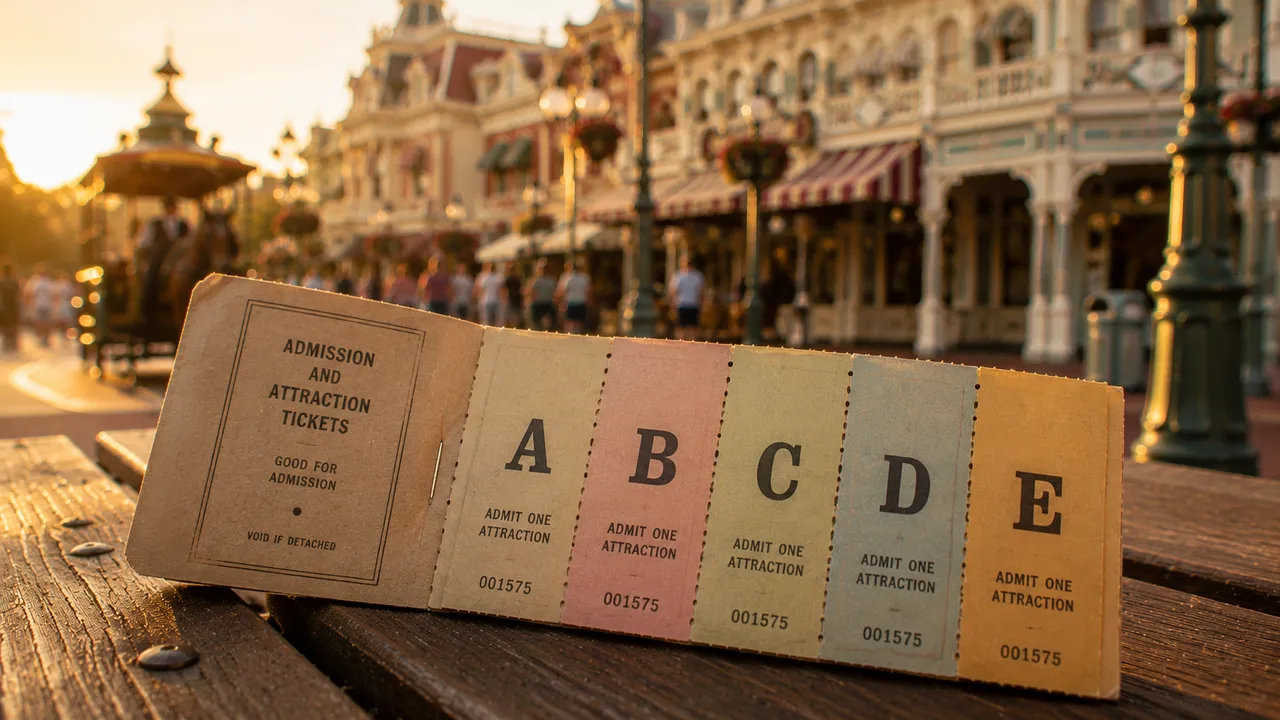
If you've ever heard someone call an exciting ride an "E-ticket experience," that phrase isn't just a figure of speech — it comes from a real ticket system Disney used for over a decade, and it's the starting point for a much longer story about how park admission changed.
The ticket book years
When Magic Kingdom opened in 1971, general park admission didn't include your rides. Guests bought a paper ticket book, and each attraction required tearing out a specific letter-graded ticket — A tickets for the mildest attractions, like the Main Street vehicles, up through E tickets for the most elaborate rides of the day, like Jungle Cruise or 20,000 Leagues Under the Sea. Want to ride an E-ticket attraction twice? You needed two E tickets, and a book only came with so many.
The switch to unlimited admission
That system started phasing out in the mid-to-late 1970s. In 1977, Disney introduced a multi-day passport that bundled park admission, unlimited rides, and even transportation into one purchase. By 1983, individual ticket books were gone entirely, replaced by the all-inclusive "World Passport" model — the direct ancestor of the single admission ticket every park uses today. Once admission stopped being priced per ride, the whole idea of an "E-ticket ride" became a nostalgic phrase rather than something you actually needed to budget for.
From paper to plastic to your wrist
Paper and card-based tickets carried on for decades after that, largely unchanged in concept even as the technology behind them modernized. The next real leap came in 2013, when Disney introduced the MagicBand — a wearable wristband that combined park admission, room key, and payment method into one RFID-enabled device. It also opened the door to features that had never been possible with paper tickets: reserving ride times in advance, linking dining reservations, and unlocking your resort room with a tap.
Why this history is worth knowing
None of this changes how you'll actually get into the parks today — ticketing keeps evolving, mostly through the app now rather than a physical band. But the arc is worth knowing: park admission went from "pay per ride, tear a ticket" to "one ticket, unlimited rides" to "one wearable device that does six other things too" in about 40 years. Each step solved a real problem guests were actually complaining about at the time, which is a pattern worth remembering next time a park rolls out a new ticketing gimmick — it's usually chasing a specific complaint, not innovation for its own sake.
Final thought
The next time you tap a wristband or scan a phone to walk into a park, you're doing in half a second what used to require carrying a paper booklet and rationing which rides you could afford to enjoy twice.
ParksLog is an independent project, not affiliated with any theme park or entertainment company mentioned. All names and trademarks belong to their respective owners. Information may change — always confirm details directly with the park before your visit.