
The real castles that inspired Hogwarts and Cinderella Castle
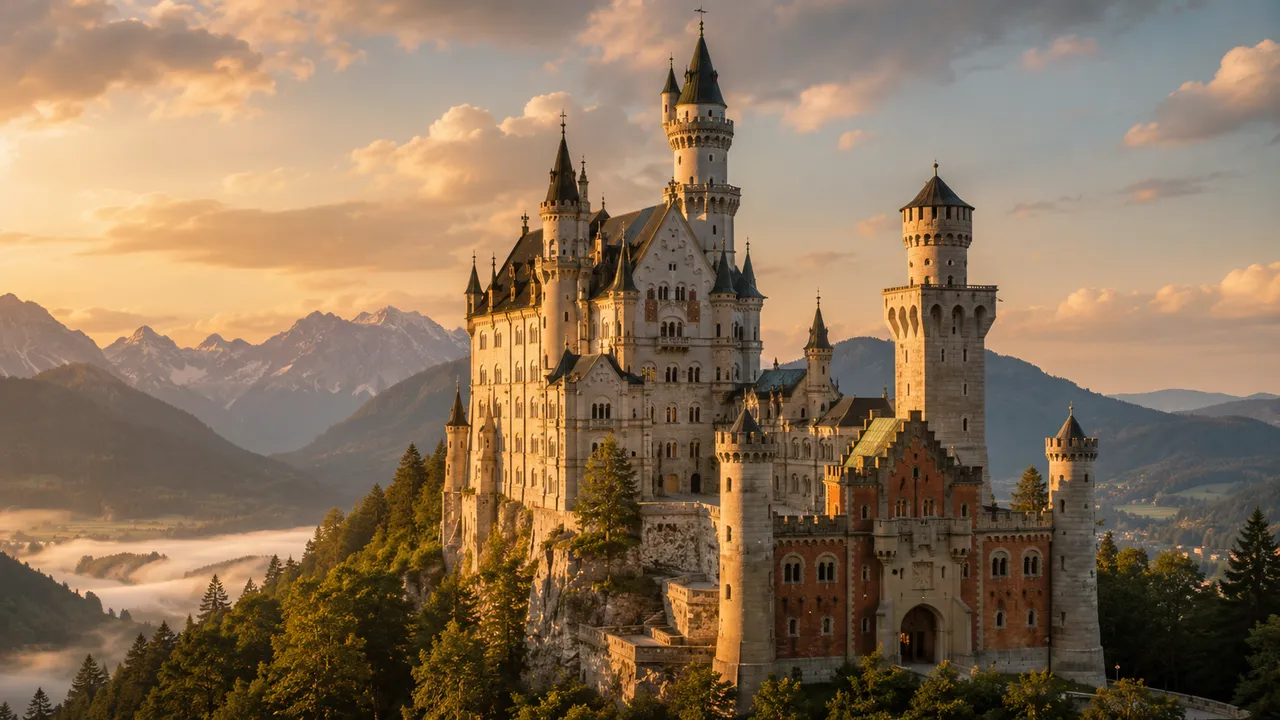
Two castles anchor two different Orlando parks, and both look the way they do because designers borrowed pieces from real European buildings rather than copying any single one exactly.
Cinderella Castle: mostly Bavarian, partly French
Cinderella Castle's most obvious influence is Neuschwanstein Castle in Bavaria, Germany — the 19th-century fairy-tale château built by King Ludwig II, less as a fortress and more as a private, romantic stage set inspired by his love of Wagner's operas. That's the resemblance most guests recognize immediately.
But the full picture pulls from more than one building. Cinderella Castle also borrows details from French royal architecture — Versailles, Fontainebleau, and the Loire Valley chateaus of Chambord, Chaumont, and Chenonceau — and from the Alcázar of Segovia in Spain, which some architecture writers consider the single most visually recognizable influence on the finished design. Completed in 1971 at 189 feet tall, it's less a copy of Neuschwanstein than a greatest-hits collection of European royal architecture, filtered through a Disney fairy tale.
Hogwarts Castle: no single building, on purpose
Harry Potter and the Forbidden Journey sits inside a version of Hogwarts that follows the same logic as the books and films it's based on — there's no single real Hogwarts to copy, because the castle was never meant to look like it was built in one architectural era. It's designed to read as a building that's grown and been added to across roughly a thousand fictional years, which is exactly why its real-world influences span several different centuries and styles.
The most-cited influences include Alnwick Castle in Northumberland, Durham Cathedral, Stirling Castle in Scotland, Gloucester Cathedral, Edinburgh Castle, and the older colleges of Oxford and Cambridge. Gothic spires and vaulted corridors come from the cathedrals; the Norman-style entrance bridge and turreted towers lean on Scottish Baronial and French Renaissance influences. The mix is the point — a real medieval castle wouldn't be architecturally consistent either, since most were expanded and rebuilt over centuries by whoever happened to be in charge at the time.
Why neither castle picked just one building
Both approaches solve the same design problem from opposite directions. Cinderella Castle blends real palaces to build something that reads as elegant and singularly fairy-tale, while Hogwarts blends real castles and cathedrals to read as a building with genuine, layered history. Neither would work as well as a direct copy of one real place — the composite is what makes each castle feel like it belongs to its own story instead of a specific country.
Final thought
Next time you're looking up at either castle, you're not looking at a replica of anywhere specific — you're looking at pieces of half a dozen real European buildings, none of which look quite like this on their own.
ParksLog is an independent project, not affiliated with any theme park or entertainment company mentioned. All names and trademarks belong to their respective owners. Information may change — always confirm details directly with the park before your visit.