
Lockers at Universal Orlando: what you need to know before you go
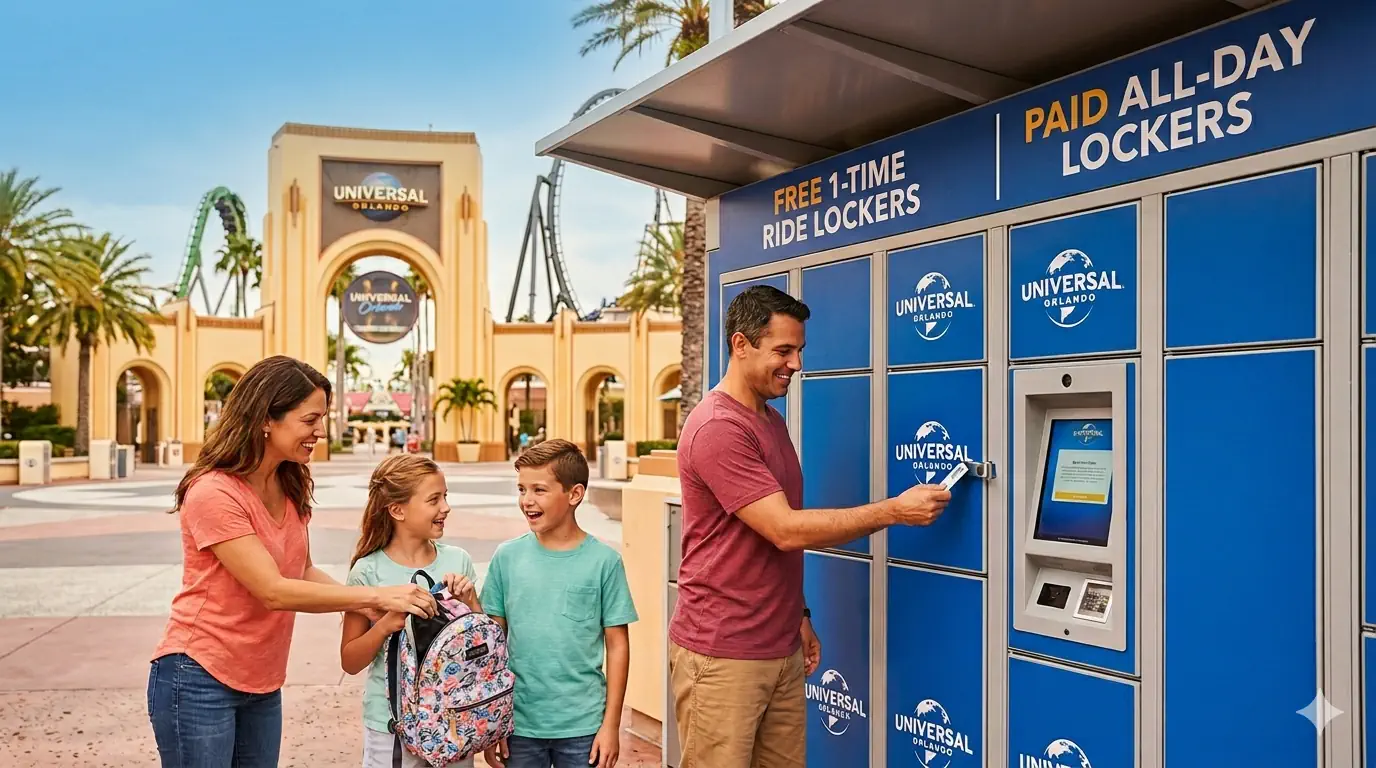
One of the biggest surprises for first-time Universal visitors is finding out that some of your favorite rides don't allow bags, purses, or even items in your pockets. That's where lockers come in — and understanding the system ahead of time can save you money and stress on the day of your visit.
Here's what families need to know about lockers at Universal Orlando.
Why rides require lockers
Theme park rides have strict policies about what you can bring on board. It's about safety — loose items can fall from rides, and on thrill rides especially, anything in your pockets becomes a hazard. So Universal offers lockers right near the attractions so you can safely store your stuff while you ride.
The catch? Some lockers are free, and some cost money.
Free vs. paid lockers
This is the key thing that surprises guests:
Free lockers are available at many attractions, but they're only free while you're on the ride. The time limit is usually tied to the ride's duration plus a small buffer (usually 15–30 minutes total). As soon as you exceed that window, you'll be charged.
Paid lockers (also called "all-day" or "large" lockers) are available throughout the parks if you want to store things longer. These cost money upfront and typically run:
- Standard lockers: $10–15 per day (varies by park and season)
- Larger lockers: $15–20+ per day (for strollers, wheelchairs, or lots of gear)
This is worth planning for. If you're carrying a backpack with sunscreen, snacks, and phone chargers for a family of four, you might use a paid locker once and recoup the cost versus multiple small free lockers.
Metal detectors: no pockets allowed
Some attractions go beyond bags and also use metal detectors at the entrance. When you walk through the metal detector, you cannot have anything in your pockets — no phone, wallet, keys, nothing.
Attractions with metal detectors (as of 2026):
Universal Studios Florida
- Revenge of the Mummy
- The Amazing Adventures of Spider-Man (at times)
- Transformers: The Ride 3D (at times)
Islands of Adventure
- The Incredible Hulk Coaster
- Harry Potter and the Forbidden Journey
- Jurassic World VelociCoaster (at times)
If you hit a metal detector attraction, you'll need a locker. Plan ahead.
Attractions that require or strongly recommend lockers
Free lockers (time-limited):
Universal Studios Florida
- Revenge of the Mummy
- Men in Black Alien Attack
- The Simpsons Ride
- Transformers: The Ride 3D
- Rip Ride Rockit
- Harry Potter and the Escape from Gringotts (bags recommended but can fit small items)
Islands of Adventure
- The Incredible Hulk Coaster
- Harry Potter and the Forbidden Journey
- Jurassic World VelociCoaster
- The Amazing Adventures of Spider-Man
- Skull Island: Reign of Kong
- Popeye & Bluto's Bilge-Rat Barges (water ride; good to lock valuables)
Universal Epic Universe
- Lookingglass Alice (bags not allowed)
- How to Train Your Dragon – Isle of Berk (bags not allowed)
- The Wizarding World — Gringotts Vault expansion (bags recommended)
- Celestina Warbeck and the Banshees attraction (items with metal)
Epic Universe has its own locker system integrated throughout the land. Cost and policies align with the other two parks.
Attractions where bags are usually fine
The good news: not every ride requires a locker. Dark rides, slower attractions, and most shows let you keep your bags with you.
- Haunted Mansion-style attractions
- Simulator/motion rides without big drops
- Most meet-and-greets
- Walkthrough experiences
- Stage shows
When in doubt, ask a Team Member at the attraction entrance — they'll tell you before you wait in line.
Smart locker strategies for families
1. Plan your big rides early Get to the park early and knock out the locker-heavy thrill rides first. Free lockers are most available in the morning.
2. Use lockers strategically If you're doing three locker-required rides in a row, consider a paid locker for that window instead of using three free ones. Do the math: three $5 charges might add up to the cost of a 2-hour paid locker.
3. Leave the backpack behind If possible, carry just a small crossbody bag or fanny pack. Fewer items = faster locker access. Save the big backpack for souvenirs at the end of the day.
4. Stroller strategy If you have a toddler, a stroller can be your locker. Many rides let you fold it and take it on board or leave it in a designated stroller parking area. Check with Team Members.
5. Phone and valuables matter most Sunscreen and a t-shirt you can live without for 30 minutes. Your phone, wallet, and glasses? Lock those up. Metal detectors are real.
6. Check the line before you commit If a locker area looks packed, ask a Team Member if there's a second locker station for that ride. Some attractions have backup locations.
Quick cost math
For a family of four on a full day:
- Free lockers only: $0 (if you time rides back-to-back and don't exceed limits)
- Three paid large lockers staggered throughout the day: ~$45–60
- One all-day paid locker: ~$15–20
A paid locker makes sense if you're doing a long park day with lots of rides that require lockers, or if you have young kids with gear.
Things to remember
- Arrive early — locker areas get crowded mid-morning
- Keep your locker number or ticket — you'll need it to open your locker later
- Metal detectors are non-negotiable — plan ahead for those attractions
- Policies can change — always check with a Team Member or the Universal Orlando app for the current rules
- Don't leave valuables in free lockers overnight — they're cleared out when the park closes
Final thought
Lockers aren't a hassle — they're a smart system that keeps everyone safe and lets you focus on the fun. A little planning ahead means no surprises, no unexpected charges, and a smoother day for your family.
ParksLog is an independent fan project and is not affiliated with NBCUniversal, Warner Bros., or the Walt Disney Company. Attraction names and places mentioned belong to their respective owners. Always confirm current offerings, hours, and locker policies with Universal Orlando before you travel. Locker costs, policies, and metal detector locations may change seasonally.